Available IPI Books

Showing posts with label Brad Grant. Show all posts

Wednesday, August 17, 2011

Indians are happy where they stand after deadline frenzy

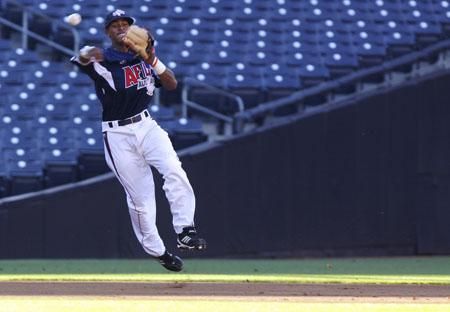
Francisco Lindor (Photo: AP)
The 2011 Draft season is officially over with the August 15th signing deadline coming and going on Monday night.

Over the course of a little over two months the Indians signed 29 of their 50 draft picks. As for the other 21 players they drafted they no longer have the option to sign them as all of those players will either enroll to school as college freshman or return as a college junior or senior.

Now that the dust has settled on the 2011 Draft, Indians Director of Amateur Scouting Brad Grant is happy with how things shook out for him and his staff, especially considering that they were able to ink their top two picks on Monday night. First round pick shortstop Francisco Lindor and second round pick right-handed pitcher Dillon Howard are highly regarded players and both agreed to terms minutes before the deadline.

“We are very happy that we were able to come to terms with Francisco Lindor, Dillon Howard, and Shawn Armstrong [on Monday night],” Grant said. “It was from the work of all of our scouts. It did not just come together at the end on [Monday night]. It was a process that began last June and our scouts did their due diligence all the way through until the end. It is really to their credit where we ended up on [Monday night]. It is not just the three we signed [Monday night], it is also the other 27 players that we are happy to enter into the organization as well.”

Over the past few years the signing process with top picks has become a running joke in the industry as all the top guys are not officially signed until the August 15th deadline date or a few days before. Even though things went right down to the last minute with Lindor - literally the last minute or two before the deadline – the Indians were confident all along that they would sign him. He ended up signing for $2.9 million, a near bonus for the organization.

“There are always questions and there is always doubt, but at the same time we were confident that Francisco wanted to play professional baseball and that this was a priority in his life,” Grant said. “We are glad that we were able to offer him the opportunity to come to an agreement. We probably came to an agreement about a minute and a half or two minutes before the deadline.”

Lindor is expected to join short-season Single-A Mahoning Valley today. He will work out with the team but is not expected to play until the last week of the season.

“We are working out the details, but he will report to Mahoning Valley and work out at Mahoning Valley and actually play in four or five games there at the end and then head to Instructional League,” Grant said. “We won’t get him into a game right away as there will probably be a progression into a game. He just worked out this summer. He hit every day, took ground balls everyday, and did his throwing program, but did not play any games this summer.”

With only three weeks left in the season it makes it sort of a lost season for the recently drafted players and the organization. Not just for the three players who signed on Monday night, but the other half a dozen players or so who signed in the past seven to ten days.

“It is certainly to the players’ advantage and to our advantage to be able to get them out and get them a full half season,” Grant said. “You lose a half season of development time, so for them to sit and not play all summer it is definitely a disadvantage to both sides. Unfortunately, it is part of the process and with where the signing deadline is we run into this situation. Hopefully in the next agreement it is something that is rectified.”

While Lindor steals a lot of the focus because he is a first round pick, Howard is every bit the player and was considered a first round talent who slipped to the second round for signability reasons. The $1.85 million bonus he signed is reflective of how much talent the Indians believe he has as they gave mid-first round money to a player in the top half of the second round.

“Howard is just an advanced feel to pitch high school pitcher,” Grant said. “He has a 90-94 MPH fastball with late sinking action to it, produces a lot of ground ball outs, and at the same time he can also get swing and miss with his fastball. He has a slurvish breaking ball that has late bite to it and has swing and miss action to it, and he has a very good feel for a changeup as well. The thing that separates him is his ability to pitch with his fastball. He can locate it to both sides, move it in and out and up and down, and he can really get groundballs pitching to contact and get outs.”

Unlike Lindor, Howard has been playing all summer as he pitched for the Midland Redskins, a team which just won the Connie Mack World Series last week for the third straight year. Because Howard has been pitching the Indians will not need to spend as much time building him back up. They are working through the process to determine where he will go these last three weeks and when he will pitch, but he is expected to pitch a few innings somewhere before the end of the season.

“We are still working through that,” Grant said about Howard’s timeline. “We know that he will definitely go to Instructional League for sure. We are just working through the details of where we assign him and where the process goes from here leading up to Instructional League. He can pitch in games as he has been pitching on a regular basis all summer, so we are just working through a plan to build him up and where he goes. I do anticipate him to pitch through August and at Instructional League.”

Armstrong’s signing is overshadowed some because of the Indians signed their top two picks at the same time he was signed, but they are just as excited to add him to the mix.

“We liked his arm strength,” Grant said. “He is a guy who can throw up to 96 MPH and has a developing breaking ball. He pitched for us this summer and the fastball velocity continued to increase throughout the course of the summer, so we think we got a power arm with some secondary pitches which are still developing. His stuff may play up even better in the bullpen long term, but we will start him at the beginning and allow it to play from there.”

If there was any disappointment from Monday night it was that the Indians were unable to come to terms with 8th round pick left-handed pitcher Stephen Tarpley. By not signing him it is the first time in the four drafts since Brad Grant took over the reigns as the head guy in charge of the draft that the Indians were unable to sign a player drafted in the first 14 rounds. The last player in the Top 14 to not sign was 7th round pick left-handed pitcher Cole St. Clair in the 2007 Draft.

Tarpley was a highly regarded high school arm that was committed to the University of Southern California, and in the end he and the Indians just could not come together on a deal that worked for both parties.

“We made a significant offer to Stephen and his family,” Grant said. “It just came down at the end that we were unable to align in value. It was a positive situation for both sides, and we wish Stephen nothing but the best of luck at USC and hope we have the opportunity to draft him again in three years.”

Now that the signing process with the 2011 Draft is over, the focus will now move into developing all of these players and getting them to the big leagues. The timetable for every player will be different and will be dictated mostly by how the players perform and develop.

“We will let the process play out as it is too early to predict where they will go,” Grant said. “We will see how things go in Instructional League and then evaluate things in spring training and then kind of allow them to dictate where they end up next spring.”

Lindor may be young, but he could move quickly through the system. The Indians are showing that with his assignment to Mahoning Valley, a league mostly filled with college players. Even still, the Indians plan to let him dictate how quickly he moves through the system and how much to challenge him.

“Every player is different,” Grant said. “Every player sets their own time frame, and we are going to allow Francisco to do the same thing. We are going to provide him with every resource to become a Major League player and how quickly that happens will be dictated by what he does.”

With the recent trades of their last two first round picks right-handed pitcher Alex White and left-handed pitcher Drew Pomeranz to the Colorado Rockies in the Ubaldo Jimenez deal, it was important that the Indians sign their top two picks this year.

But for Grant and his staff the focus is always about getting the guys that they like and value signed regardless of what the team does on the trade front. It is all about adding more talent into the organization and providing the Player Development staff with a new group of players to develop and nurture into possible big league options down the road.

“Every year it is important to sign our picks,” Grant said. “Whether we have made trades or not we are always looking to acquire premium talent and enter it into our organization. The trade side of things did not add any additional pressure as we always want to add talent into our system and we feel like we have done it again this year.”

Follow Tony and the Indians Prospect Insider on Twitter @TonyIPI. Also, his latest book the 2011 Cleveland Indians Top 100 Prospects & More is available for purchase for $20.95 to customers in the US (shipping and handling extra).

Wednesday, June 1, 2011

2011 MLB Draft: Q&A with Brad Grant

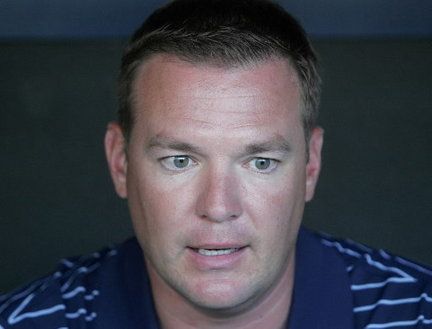
Brad Grant (Photo: AP)
The 2011 MLB Draft is less than a week away.

The three day extravaganza kicks off next Monday night with the first round on national television, and with that in mind it is time to start focusing in on the draft and get a feel for what the Cleveland Indians may do this year.

I recently had a chance to chat with Indians Amateur Scouting Director Brad Grant about the upcoming draft and asked him a ton of questions with regard to their philosophy going into it. While he kept several of his answers simple and vague so as to not tip anyone off on who they may pick or what their budget may be – which makes sense from a competitive standpoint – he did share several things that should help answer several burning questions on the minds of Tribe fans leading into the draft.

Q: The weather has been brutal around the country, especially the eastern portion of the United States. How has this affected your scouting efforts?

Brad Grant (BG): “It’s been tough. You have only been able to see four or five starts with high profile pitchers because of all the weather and everything. It has been everywhere to Alabama and Mississippi, and for the first four weeks on the West Coast you couldn’t get a game in out there. It has been stressful, but we will get it done.”

Q: Scouting Director John Mirabelli runs the entire scouting operation for the organization and is still very involved with the draft. How do you and John handle the draft with regard to who ultimately has the responsibility and makes the final decisions?

BG: “I rely on John a lot for his evaluations and his experience in the draft room. He is invaluable to me in terms of those two things, but at the same time he allows me to ultimately make the decision in the end who we scout and who we draft. But he is definitely a big part of it and I rely on him a lot. There is a big process to it and you have to rely on all of your people to give you the information and then make the decision.”

Q: With the depth in the system does it allow you to maybe be more aggressive with higher upside high risk picks?

BG: “Yes it does. We are at a point now where we do have depth and we can take some risk. I think we have shown we are willing to do that, but there is still a balance to everything. You want to try and acquire all different types of players with some guys who will make it quickly and guys who have higher upside too possibly. We are going to scout everybody, put them under the microscope, go through the process with everyone, and then take the player we feel best about with each pick.”

Q: So if you had a weaker system you may play it safer?

BG: “Yes, but at the same time you don’t want to draft all the same type of guys where you are basing your risk on these high upside guys. You want to try and balance it out at the same time too. There is a risk and reward to balance with each pick and the investment that goes with it as well.”

Q: You haven’t drafted a high school player with a first round pick since 2001. Any chance we break the ten year cycle of no prep plays in the first round this year?

BG: “We’ll see. We are not eliminating anybody at all. We are scouting everybody, and it is just a matter as to what is available with that pick. We are looking at taking the best player.”

Q: It does not seem like a coincidence but more a philosophy that we have taken a college player with our first pick for so long. Has it really been a philosophy to go with college players in the first round?

BG: “Yes, I think so. Again you are trying to minimize the risk with that first pick, but I think with where we are at right now and with where the strength of the draft is this year we have to keep everything available. Everything is in play this year, I can tell you that.”

Q: Are there any players you have ruled out due to perceived bonus demands or being a two sport high school player?

BG: “We’ll just take it on a case by case basis and take a look at it. Right now we are not eliminating anything and everything is open to us at this point.”

Q: Due to compensation rules the Tampa Bay Rays will make ten selections before we even make our second pick. Do you foresee the draft compensation system being something that is looked at this offseason when discussing the new CBA?

BG: “I think it will be for sure, but we will see what happens. It will be something that will surely be talked about with the next agreement.”

Q: Does the looming CBA and the potential for hard slotting in the future affect your draft plans at all this year?

BG: “No, you just take it on a year by year basis. We are going to go with what we have to work with right now, and then adapt with whatever comes in the future.”

Q: Do the new composite bats in college change the way you evaluate the players? Does it give you a better feel for hitting ability and a pitcher’s pitch ability?

BG: “We are going through the process a little bit, but it definitely helps the pitchers for sure and I think it helps clarify a little bit the hitters as it is closer to wood. I actually think the ball comes off wood better than the composite bats at this point. So, it is something we are trying to figure out how we balance it, but I think it has definitely helped the pitchers pitch with their fastball more and keep the ball in the ballpark more. At the same time your good hitters are always going to be able to hit no matter what bat they use, so those guys kind of separate themselves out. But there is a noticeable difference, there is no doubt about that.”

Q: Is your scouting philosophy focused more on results or projection?

BG: “Both come into play. We are looking at results, but at the same time we are projecting how things will play out in the future too. Results help you in the process, but at the same time you are not always going to see results when you go to the games. You are always projecting out different things with how they are going to play. With a pitcher you are projecting out how their pitches are going to play, and with a hitter you may not see him go 4-for-4 but you have to project out how things are going to go in the future too. It is a combination of both, and when you have both it gives you more information to make a better decision.”

Q: Last year you guys broke the bank with a very aggressive draft and signing process, in 2009 you guys mostly held to slot, and in 2008 it was a mixture of the last two years. Do we plan to be aggressive again this year with the draft and budget?

BG: “Just from a competitive standpoint we can’t really say where we are at with our draft philosophy or budget coming in. I think it is safe to say we will go out and get the best player available.”

Q: Do you consider this to be the deepest draft in many years?

BG: “Yeah, I think especially with the power arms with the number of people throwing up to 95 MPH is deep this year. We haven’t seen that number of power arms in the past. When you add in the position players as well, it is a very good draft and definitely has depth to it. It should be an exciting draft this year for sure.”

Q: There are no guarantees with the draft since so much forecasting is involved. You have had three strong drafts in a row, so do you feel confident in your process and the success of the past where we can have another very good draft this year?

BG: “I think we have learned from our process and I think we will be prepared to make good decisions. You don’t know what is going to happen and you can’t predict things or make assumptions. With where we are at now we don’t go into the draft room and make any assumptions. We are prepared to make good decisions all the way through the draft, and react when we have to react. Hopefully that process continues this year, and I believe it will.”

Follow Tony and the Indians Prospect Insider on Twitter @TonyIPI. Also, his latest book the 2011 Cleveland Indians Top 100 Prospects & More is available for purchase for $20.95 to customers in the US (shipping and handling extra).
Thursday, March 31, 2011

Indians preparing for another (successful) draft

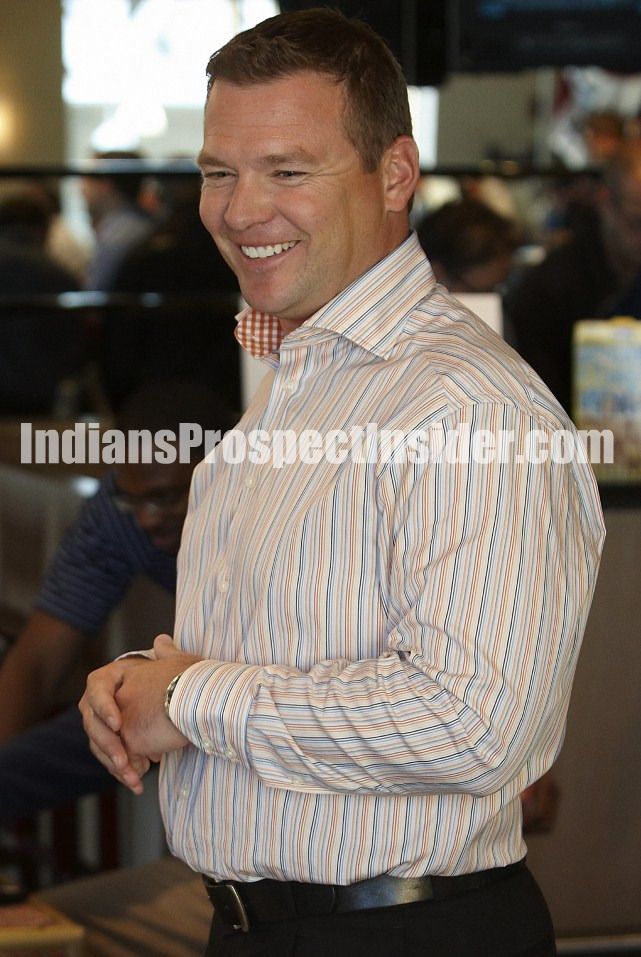
(Photo: Dan Mendlik)
We are just a little over two months from the 2011 First-Year Player Draft which commences on June 6th in Secaucus, NJ.

While organizations are busy finalizing their 25-man rosters for the start of the regular season, area scouts for every team have been dispatched all across the country and are working behind the scenes to find talent for their teams.  The hope is to find talent that will allow teams to sustain success or to build for a brighter future.

With the draft drawing closer and closer, the draft shopping season has certainly kicked into high gear.

"This is kind of our busiest time from now until June,” said Indians Amateur Scouting Director Brad Grant in an interview with the IPI last week.  “All of the high schools are starting to get going now and the colleges are about a quarter of their way into their season. We kind of prioritized the college players at the beginning and now that the high schools have started up we are starting to add those guys into the mix as well."

The draft process for the Indians starts immediately after the conclusion of the previous draft.  When the Indians were done making their selections in last year’s draft, they reconvened after a short break and started to formulate their process for this year’s draft and got to work scouting players in summer ball.

"Our process really begins the summer before,” said Grant.  “We use the summer to kind of start to build our list and prioritize who the top players are coming into the draft, and once we get into the spring we work off that list."

At the moment the Indians have already cast a wide net on the college scene and have seen just about every college player at least once.  Now they are going back for second and third looks while at the same time getting first looks at the high school action which just recently kicked up.

"Since February our crosscheckers and area guys have all been out scouting,” said Grant.  “We have probably already gone through the crop one time and we will continue to go back.  Our goal is to get as many looks as possible at all players, so we will keep going back to see as many players as possible and if new guys pop up we will be ready to react to those guys as well.  Because the college season starts so early in February we were able to get through that once and we are heading back for second looks now."

Prioritizing the right guys can be tricky, especially after the first round.  But it is part of the process in preparing for the first pick and setting up the draft board for the rest of the draft.

"It is a larger list to begin with and we will go one time through it and whittle it down and start to go back for second and third looks just to make sure that we prioritize guys the right way,” said Grant.  “But at the same time players get better over the course of the spring, so our goal is to make sure that we don't eliminate anybody and scout everything as thoroughly as we possibly can and get as many looks as possible."

The Indians have the 8th overall pick in the first round of the draft this year.  They actually tied with the Washington Nationals for the 6th pick, but since both clubs finished 69-93 last season the tiebreaker awarded the 6th pick to the team (Washington) with the worse record the previous year.

Also, because the Arizona Diamondbacks did not sign 2010 1st round pick pitcher Barrett Loux they were compensated with a pick in the exact some spot in this year’s draft, so this slid the Indians down another spot to the 8th pick.

In any case, Grant feels that the Indians will be able to get an impact caliber player in the 8th spot in what he feels is a deeper draft this year, especially with high end impact caliber players in the first round.

"This year it seems like it is pretty high end, especially at the top of the draft,” said Grant.  “There is some depth to the very good players [available] and there is a chance for a lot of impact players.  Last year was a good draft, but not the depth on the impact side of things.  On paper it looks very good right now because there are impact players up top and there is more depth further down below as well."

The Indians will not go into the draft with any specific area of need to focus in on.  They have taken pitchers in the first round in each of the last two drafts, but previous selections or team need at the big league level will not factor into the equation for most of the picks, especially the first pick.  They will go with the approach to take the best player available in just about every round.

“Especially at the top we are going to look to take the best player as you never know what is going to happen on the Major League side of things,” said Grant.  “With the way baseball is set up it is not like football or basketball where the player has to make an immediate impact, so we always look to take the best player available with that first pick and actually all the way through [the draft].  You are always going to balance things out in the draft as you go through it depending on what you have taken."

The burning question for most Tribe fans is if the organization’s aggressive approach from last year will carry over into the 2011 Draft.  The Indians understand that just about the only place they can compete toe to toe financially with the big market teams is in the draft, so it would be a surprise if they really pulled the reigns back this year.

While Grant says that they plan to be aggressive, he is also quick to note that they have not yet finalized their plan or budget for the draft.

"We will see how things play out as we get closer to the draft,” said Grant.  “We plan to have an aggressive draft again this year and plan to take the best player available again just as we have done in the past.  We will wait and see how it plays out and it is still yet to be determined.  We just have to go about it that we are going to scout everybody and keep everyone in play right now and make sure we are prepared to make the best decision possible when we get into the draft room [in June]."

The Indians had a highly touted draft last year when they spent close to $10 million in signing bonuses and picked up a lot of good talent, but they arguably had just as good of a draft the previous year in 2009 with almost half the budget.  So being aggressive is not always about spending a lot of money.

It all comes down to scouting, and so far things look good since Grant officially took lead amateur draft responsibilities from Scouting Director John Mirabelli in 2008.  The three first rounds picks under Grant since 2008 are third baseman Lonnie Chisenhall (2008), right-handed pitcher Alex White (2009), and left-hander Drew Pomeranz (2010), and all three are arguably the top three prospects in the Indians system.

When you go beyond the first round and consider second baseman Cord Phelps (2008, 3rd round), right-handed reliever Zach Putnam (2008, 5th round), right-handed reliever Bryce Stowell (2008, 22nd round), and second baseman Jason Kipnis (2009, 2nd round), that’s a lot of talent that has a chance to play in the big leagues this year that has been drafted and developed by the organization.  For the Indians to have any chance at success in the future this is exactly the blueprint they need to keep following.

That’s why Grant and his staff are hard at work looking at players of all shapes, sizes, and abilities in the hopes of finding talented players to help the Indians achieve success.

"A lot can change with the draft, so you don't want to assume anything,” said Grant.  “You want to be ready to react."

Notebook:

Wolters on the draft:  Speaking of the draft, Indians shortstop Tony Wolters is happy that whole process is in his rearview mirror.  He was not a big fan of all the showcases and how teams pick players apart and measure so many intangibles.  “All the showcases, I hated them,” said Wolters.  “I hated the 60 as I would cry the night before because I did not want to do that.  I just went out there and played baseball, but I did not like the stuff to see how hard you throw, how far you can hit it…that’s just not me.  So I did not like all that stuff, but I know you have to do it.  I am excited it is all over, and I am excited I had the privilege to be picked up by a team like the Indians and just play baseball.”

Mills hobbled:  First baseman Beau Mills has not participated in any games this spring in minor league camp.  Before departing last week I saw him in a walking boot on what I believe was his left foot.  According to another report the Indians are assessing his availability for the start of the season, which does not sound good.  It looks like he will open the season on the disabled list, which if that does happen it would leave a big hole at first base at Double-A Akron.  The Indians have a logjam at first base and the outfield in Triple-A Columbus, so it would not surprise me to see either Jared Head or Matt McBride open as the Akron first baseman for a few weeks.

Clippers trying to stay sharp:  Now that the exhibition game with Cleveland has come and gone in Columbus they now have a whole week to sit around and wait until they start play a week from today.  To keep them game ready and give the pitchers regular work they will play in three exhibition games next week.  On Monday they will play Double-A Akron on the road, come home Tuesday and play the Ohio State University at Huntington Park, and then host Akron on Wednesday night.  The Ohio State game costs $5 to attend and the Akron game in Columbus is free.

Columbus recap: Columbus was snowed out in their game against the big league team yesterday with the game being cancelled in the bottom of the third inning.

Akron recap: Akron beat the Dodger 4-3. Outfielder Grady Sizemore played center field and went 0-for-3 at the plate with a strikeout. Shortstop Juan Diaz (2-for-3, R, 2B, 3B, K) and third baseman Kyle Bellow (2-for-2, R, RBI) paced the offense. Left-hander Matt Packer got the start and went 4.0 innings (5 H, 3 R/ER, 1 BB, 4 K). In relief righty C.C. Lee went 2.0 innings (1 H, 0 R, 1 BB, 2 K), righty Connor Graham went 2.0 innings (3 H, 0 R, 0 BB, 1 K), and righty Matt Langwell went 1.0 inning (0 H, 0 R, 0 BB, 2 K).

Kinston recap: The K-Tribe lost to the Dodgers 2-1. It was a quiet day for the offense with third baseman Adam Abraham (2-for-3, R, 2B) and second baseman Ronald Rivas (1-for-3, 2B, RBI) doing almost all of the damage. On the mound lefty T.J. House went 3.0 innings (4 H, 2 R/ER, 1 BB, 4 K), righty Travis Turek went 2.0 innings (0 H, 0 R, 0 BB, 0 K), and righty Tyler Sturdevant went 2.0 innings (3 H, 0 R, 1 BB, 0 K).

Lake County recap: The Captains beat the Dodgers 8-7. Catcher Alex Monsalve had a big day (3-for-4, 3 R, HR, 3 RBI, K), and outfielder Brian Heere (2-for-4, R, 2 B) and Anthony Gallas (2-for-3, BB, K) as well as catcher Alex Lavisky (1-for-3, 2 R, 2B, BB, K) assisted with solid games. Lefty James Reichenbach got the start and went 3.0 excellent innings (0 H, 0 R, 0 BB, 2 K). Righty Jordan Cooper went 2.0 innings (4 H, 4 R/ER, 0 BB, 1 K), righty Owen Dew went 2.0 innings (2 H, 0 R, 0 BB, 1 K), and sidearming righty Dale Dickerson went 1.0 inning (2 H, 3 R/ER, 2 BB, 0 K).

Follow Tony and the Indians Prospect Insider on Twitter @TonyIPI. Also, his latest book the 2011 Cleveland Indians Top 100 Prospects & More is available for purchase for $20.95 to customers in the US (shipping and handling extra).
Monday, September 13, 2010

Year End Draft Review With Brad Grant

Dan Mendlik/Cleveland Indians
The 2010 Draft process came to a close on August 16th with the signing deadline coming and going, and once the dust settled the Indians had signed 27 of their 50 draft picks this year.  They paid a club record $9.3 million in bonuses, with 15 players getting $100K or more and four players getting $1M or more.

The architect of the Indians aggressive approach in the draft this year was Amateur Scouting Director Brad Grant.  He along with the help of Scouting Director John Mirabelli and about two dozen area scouts and crosscheckers had what on paper was an impactful, memorable draft, and when it is looked back on in four to five years has the potential to go down as one of the all-time great drafts in Indians’ history.

As with any draft, there are no sure things and the attrition rate can be high.  There could be some unexpected surprises or disappointments, and as always injuries are the great equalizer.  But, with what appears a string of now three successful drafts in a row since Grant took the draft reigns in 2008, things are finally starting to look more promising with the Indians now beginning to draft and develop their own players.

I had a chance to talk to Grant over the weekend about a myriad of topics surrounding this year’s draft, the draft process, and their preparations for next year.  Below is what was talked about, in Q&A style.

Q: Now that the dust has settled on the 2010 Draft and the signing deadline has come and gone, how do you feel about things?

Brad Grant (BG):  We are very excited about how the process worked out with the ability to sign the first 14 picks.  We went into the draft trying to talk the best player available and trying to add as much talent as we possibly could.  We came out of it where right now on paper it looks like a very successful draft.  We will see where it all plays out over the next four years, but we like where we are right now."

Q: Going into the draft it was said you would be very aggressive with your approach not only in drafting players, but in getting them signed as well.  As an example, you selected 12 of Baseball America's Top 200 draft prospects and ended up signing 11 of them.  You went overslot on many players, more than just about any other team.  Where did the aggressive approach come from this year?

BG: I just think with where we are as an organization we need to continue to add talent to our development system.  Obviously we are not going to be able to compete on the free agent market, especially with premium free agent acquisitions, so we have to acquire talent at the amateur level and develop it and add it to our major league club.  We wanted to be aggressive.  We have been aggressive in the past with our drafts, and we wanted to continue to be aggressive this year and ensure we are adding as much talent as possible to the development system.

Q: Why don't we just adopt this approach every year, or is this easier said than done?

BG: Yeah it is easier said than done.  It is a case by case basis and depends with where we are economically as well and what we have available to be able to spend.  Last year we only went out of slot one time, but we still felt like we had a very successful draft last year.  Recognizing that we did take players that would sign for slot, we still took very talented players.  So just because you take players and sign them for overslot doesn't dictate that you are going to have premium talent as we were able to add premium talent last year without going overslot.

Q: The late signing deadline and the slot recommendations seem to be a crutch in the negotiating process.  With more and more players signing so late, you as an organization are losing more and more opportunities to get these guys on the field in their draft year for a significant amount of games.  Is there anything you would like to see changed with the signing process?

BG: Yeah we will see what happens over the course of the next basic agreement.  Certainly moving the signing deadline closer to the draft so that we can get players out and into our development system would definitely be something I would like.  Also, just having some consistency in the process so it doesn't reward a larger market team and doesn't penalize a smaller market team and that there is some consistency with teams being able to acquire the best available players with the way they are picking. (Editor’s Note: I take this as Grant talking about the free agent draft pick compensation system how so many large market teams get comp picks.)

Q: There were a lot of overslot signings this year, not just by the Indians but industry-wide.  What kind of repercussions – if any – come from Major League Baseball for going overslot with so many players?

BG: It is just part of the process to go through it and to make sure that we are negotiating correctly and that we are going through it correctly.  Each case is dictated by a players leverage in negotiations and what type of leverage they have.  Just because you are going overslot doesn't dictate they have better talent than a player who signs in that slot, it is more based on their leverage during the course of negotiations.

Q: How does the relationship work between major league teams and colleges since you are essentially taking their draft eligible sophomores, juniors, enrolled freshman, or transfers?

BG:  It is just how it works and is a professional relationship. Obviously they are working to try and keep their players, and we are working to try and sign them.  Both sides realize that sometimes we will get it and the college realizes that sometimes they will get the player back.  It is just part of the process and we want to build and maintain relationships with the college programs.  Obviously we need their assistance and they need our assistance when their players are ready to be drafted as they want to have them drafted.  It is definitely a professional relationship and we try to maintain those relationships with all college programs.

Q: When it comes to the draft do your crosscheckers see everyone you draft, or as you get deeper in the draft is it really the scout’s draft?

BG: With how we are setup with four regional crosscheckers and a national crosschecker, we are usually able to get pretty deep in terms of our crosscheck looks.  A lot of times it is just one look from a crosschecker, whereas the top end guys in the first five-ten picks will have multiple crosscheck looks where later on it becomes more of the scout's draft.  It is the area scout having multiple looks at a player and maybe one look by a crosschecker.  A lot of times the late picks are dictated by the area scout.

Q: You took an approach of taking the best player available in the draft this year with each pick, but are there ever situations in any given round with two or more players having a similar rating where depth in a position may influence a pick?

BG: You are always using different things to separate out players.  You are always going to have players with similar type abilities, so you use different indicators then to separate it out whether it be what we have already taken in the draft, what is perceived as a lack of depth in our development system, or just using premium position/starter to separate out things.  There are a lot of different pieces that come into play in terms of separating out players and making decisions.  A lot of it to is the area scout who knows the guy the best and says “this is a guy I'd like to get so let’s go get him now".

Q: With Pomeranz signing so late and not throwing a professional pitch this year, is he very likely going to be on the same track that Alex White has been on the past 12 months where he goes to Instructional League, opens in Kinston, and pitches a majority of next season at Akron?

BG: I always kind of go back to where every player dictates their own time frame and path.  Obviously Drew had success at the collegiate level and at the national level with Team USA.  He has the ability to come in and hopefully take that similar path.  We will have him go to Instructional League right now and then have him probably start at Kinston next year and have him dictate what kind of path he takes.  Hopefully it is one where he can move rather quickly.

Q: We have heard a lot about most of your top ten picks this year, but the one guy who has not been talked about much at all is 6th round pick shortstop Nick Bartolone.  Considering how high he was taken, he has been tabbed as a mystery man because of the lack of information on him from several draft publications.  Is this a guy where his scout Don Lyle really pushed for us to go get him?

BG:  Don has a lot of experience and has had a lot of success signing major league players.  This is a guy that Don identified early on, and when Don gets a gut feel for a guy I usually listen to that.  This was a case where Don felt strongly about Nick and his ability to play short was something that he really thought was an attribute.  He is a guy who can play a premium position at shortstop, has speed, arm strength and as he gets stronger and continues to adjust to wood will be able to handle the wood.  He already kind of exceeded our expectations offensively a little bit this year.  He went out and played the defense that we thought he would be able to play and held his own offensively, which was good to see.  Maybe he wasn't a name in Baseball America, but he was known in the industry and definitely in northern California.  It wasn't like it was a guy who was hidden under the radar.

Q: Going back to the Baseball America Top 200 and the 12 players you drafted, the one player in that group of twelve you did not sign was right-handed pitcher Burch Smith who opted to go to school at Oklahoma.  I know you guys are excited about the end results of the signing process, if there was a “guy who got away”, would it be him?

BG: Yeah.  We were going to try and make a pretty aggressive offer to him, but Burch made the decision that he wanted to go to college and was pretty firm on that.  We respected how he went about the process.  He said that college was important to him and he wanted to go and try to prove it one more year.  He is definitely a guy we are going to scout again next year and definitely a guy on our radar again next year.

Q: Instructional League starts up this week.  One thing of note with the roster is that 9th round pick third baseman Hunter Jones is listed as an outfielder.  Is he moving to the outfield, or are you guys just experimenting with him out there?

BG: I am not going to tell you that he is going to make the switch yet.  We are just trying the different options and see how he plays out there as well.  We think he can play third base, but also just want the flexibility to see how he performs in the outfield too.  We like the speed, power, athleticism and upside.  He is an athlete and obviously has bloodlines as a well above average runner who has power and is progressing in terms of his hitting and defense.  He is an athlete that has a strong baseball background and a guy we feel that we can mold into a very good player.

Q: Are there any other position changes in store for anyone else in Instructs?

BG: Jones is the only one.  You have seen Tyler Holt play a little bit on the corners [in Lake County], but only because of Cid there in Lake County.  Holt is a guy who is going to play a lot more center field.  This year we didn't have many position change guys as we took all guys that are playing their position we currently see them playing at in the future.

Q: Speaking of Holt, he has certainly lived up to his billing as a very intense player who lets his emotions show.  How do you approach a player like this to scale it back a little since that intense approach is so much a part of their game?

BG: That aggressive approach is part of his game.  He will find that he will have to tone it down a little bit in terms of just the length to a minor league and ultimately major league season.  That to play at that type of speed and aggressiveness that he will have to manage it.  At the same time you don't want to take it away from him at all because that is what makes him good and allows him to overachieve.  That's what has gotten him to the point where he is right now.

Q: I know it is early in the process, but any idea what the draft strategy will be next year?

BG: We will wait and see and what we think the talent level is and where we are picking.  A lot of those things will come out during the course of the offseason in our planning and everything else.  So how we are going to approach it next year is still something that we are continuing to discuss and walk through.

Q: There has been some talk that the 2011 Draft looks to be pretty good, is this true?

BG: On paper right now, especially at the top end, there is probably more depth to it whereas this past year the industry kind of agreed on the top three and after that kind of depending on who you liked there were a lot of similar type players.  I think next year, looking at it right now, in terms of premium players there will be more depth at the top of the draft.

Q: What is the general schedule of events for the next several months to prepare for next year’s draft?

BG: We already started in June right after we finished the Draft.  Our scouts were out and I went out to the Tournament of the Stars and the high school showcases.  We covered all the collegiate summer leagues, saw the east coast showcases, and the national showcases.  When we get to September there is a little bit of a lull, and now we will start right back up in October with all the college fall ball and scout days that each university has and begin to cover all the colleges again.  It doesn't stop at all.  We will break again for a couple of weeks in January and then pick it up at the end of January.

Follow Tony and the Indians Prospect Insider on Twitter @TonyIPI.  His new book the 2010 Cleveland Indians Top 100 Prospects & More is also available for purchase on Amazon.com or his site.