Available IPI Books

Tuesday, February 8, 2011

2011 Indians Top 50 Prospects: #35 Kyle Bellows

Kyle Bellows – Third Baseman
Born: 08/19/1988 – Height: 6’3” – Weight: 210 – Bats: Right – Throws: Right
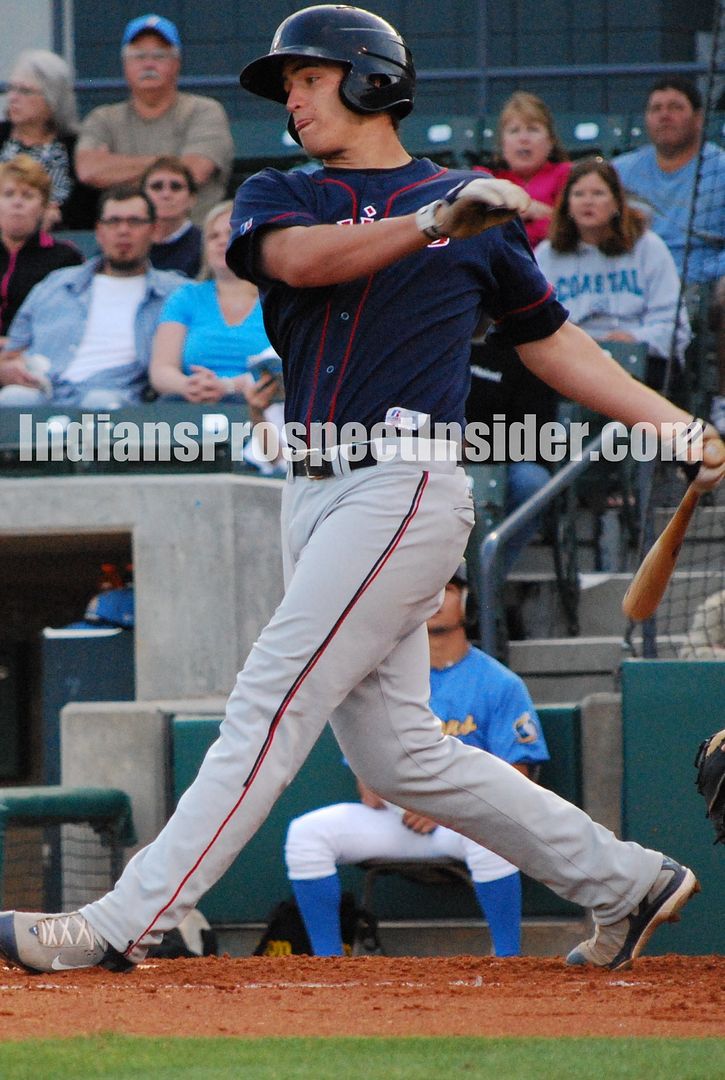
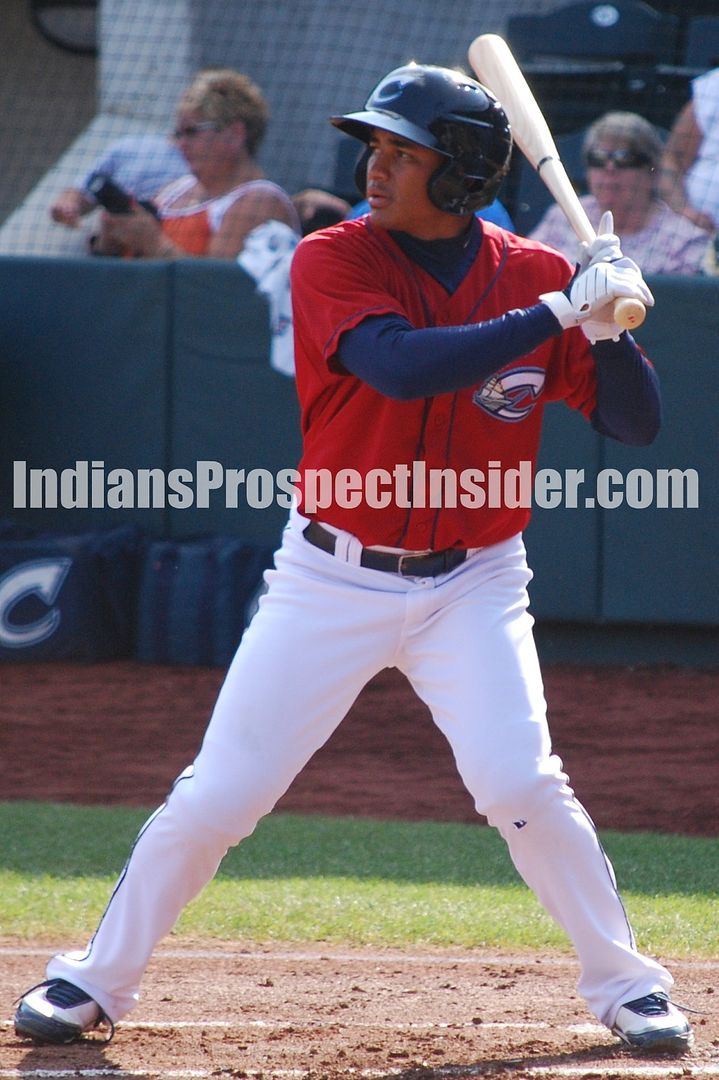
(Photo: Tony Lastoria)
History: Bellows was selected by the Indians in the 4th round of the 2009 Draft out of San Jose State. The summer after his freshman season at San Jose he played in the New England Collegiate League and was rated as the second best prospect in the whole league (Steven Strasburg was first). His professional debut at short-season Single-A Mahoning Valley in 2009 ended prematurely in the middle of August when he broke a bone in his hand and dislocated a finger sliding back into a base. Last year he led all Carolina League third basemen in fielding percentage.

Strengths: Bellows has a developing bat with very good power potential. He is not expected to be someone who hits for a high average as he moves up the professional ranks, but he has shown a developing approach at the plate where he may be able to better limit his strikeouts and draw a few more walks. The Indians like the athleticism to his swing and shortness to it, and feel his commitment to his new approach has been solid. His best tool at the plate is no doubt his nice raw power and ability to be a run producer. While he only has average speed, he shows some very good athleticism running the bases. He is a very strong and athletic physical specimen with a frame that still has room for growth as he matures. He also has a high aptitude with a drive to improve, and is an extremely confident player.

Bellows played shortstop, first base, and third base in college, though was primarily a shortstop. Upon drafting and signing him, the Indians immediately moved him from shortstop to third base with the assistance of Mahoning Valley manager Travis Fryman. The move has fit him like a glove as there has been little if any transitional period to get adjusted to the new position and he has shown that he has the athleticism and bat to be an everyday player there. He shows an ease to his game with an exceptional ability to field and control just about any ball he is able to get to.  He moves well and has great range where he makes all the routine plays and shows an ability to make the exceptional ones too. He shows excellent instincts and agility, and comes in on balls well. He has great arm strength with outstanding accuracy, even on balls hit deep down the line. His throwing accuracy is just remarkable as no matter where he picks up the ball and stands up he is always able to hit the first baseman in the chest. Due to his athleticism and strong arm, if the need ever arises he could be moved to right field one day.

Opportunities: Bellows lost 20 pounds last year over the grind of his first full season, so he needs to learn how to maintain his strength throughout the season as it definitely impacted his offense. At the plate he his swing gets long and he works under the ball a little bit and sometimes starts a little late which makes him longer and even more underneath. Indians personnel have worked with him on getting him ready and getting him started sooner and leveling out his swing a little bit to make sure he is a little shorter to the ball because when he is short to the ball they have seen some balls really jump off his bat. He had a long swing coming out of college, so shortening up his swing while not taking away from his power is a challenge for him and the organization. His strike zone discipline also needs improvement.

Outlook: Last year Bellows was a rock at third base all season for High-A Kinston, and has really established himself as one of the best defensive third basemen in the minors. He may not be in the same class as fellow farmhand Lonnie Chisenhall when it comes to his prospect standing and offensive abilities, but he is every bit the defensive player and then some. The key for him is developing his plate discipline, approach, and unveiling that hidden raw power. He has a great chance to be a solid everyday third baseman at the big league level, but even if he struggles to become an everyday player he has the athleticism and versatility to move around the diamond like Casey Blake did when he was first entering the big leagues. He should open the 2011 season at Double-A Akron.

YearAgeTeamLvlGABRH2B3BHRRBIBBSOSBAVGOBPSLGOPS
200921Mahoning ValleyA-5420029484473220308.240.311.405.716
201022KinstonA+12446248117215106639914.253.318.385.703
MiLB Totals1786627716525917985912112.249.316.391.707

Monday, February 7, 2011

2011 Indians Top 50 Prospects: #36 Robbie Aviles

Robbie Aviles – Right-handed Pitcher
Born: 12/17/1991 – Height: 6’4” – Weight: 195 – Bats: Left – Throws: Right

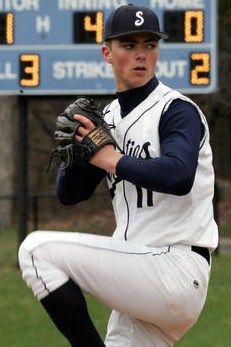
(Photo: LoHud.com)
History: The Indians selected Aviles in the 7th round of the 2010 Draft out of Suffern High School (NY). The Indians signed him for $150,000 which was much lower than the bonus he was originally anticipated to command in the draft because he tore ligaments in his elbow just days before the draft. Shortly after signing he underwent Tommy John surgery in July. Had he not signed with the Indians he was committed to attend the University of Florida. His father, Brian, was a former minor league pitcher in the Atlanta Braves system for five seasons from 1983-1987 and reached as high as Double-A.

Strengths: Aviles has a very athletic and projectable build with a loose, whip-line arm action that allows him to get good leverage on hitters. Prior to his injury his fastball typically sat at 90-92 MPH and touched 95 MPH. It is believed that as he grows into his frame and gets stronger his velocity will improve, which is something that is also often seen from pitchers who recover from Tommy John surgery.  Aviles complements his fastball with a curveball and changeup, with the curveball viewed is an average offering with the potential to be a plus pitch. He gets good velocity on his curveball as it comes in at hitters around 78-80 MPH and has good 11-5 break with tight, downward action. His changeup is his third pitch, but he rarely threw it in high school and with more use and refinement as a pro it could become a plus offering for him.

Opportunities: Health is the biggest concern with Aviles. Tommy John is a major surgery, though these days a high rate of pitchers have a full recovery and are often better than they were before surgery. In addition to that, while he has very good command for his age it still needs refining. He is also a very raw, unpolished pitcher so his lengthy rehab could pay dividends as he will get lots of extra attention with instruction from coaches. He needs work on more consistently finishing his pitches and repeating his delivery.

Outlook: Coming into the draft last year Aviles was arguably the #1 prospect in the entire Northeast section of the country and figured to be a 1st or 2nd round pick, but the elbow injury he suffered just before the draft hurt his standing considerably. The Indians took a calculated shot on drafting him even though they knew he was hurt, which is a testament to their belief in him as a prospect and also that their medical staff can get him 100% healthy again. He will open the 2011 season in extended spring training, and if his rehab goes well he could make his return to the mound late in the Arizona Summer League season or in the fall during Instructional League.

YearAgeTeamLvlWLERAGSVIPHERHRBBSOAVGBB/9K/9WHIP
201018DNP----------------
MiLB Totals----------------


Sunday, February 6, 2011

Tribe Happenings: Indians in talks with Bonderman, Millwood

The Indians have had discussions with
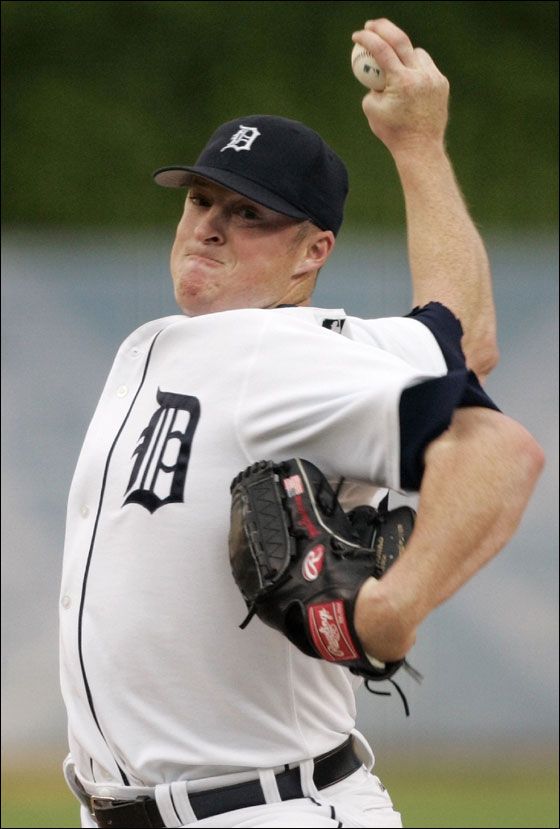
Tigers free agent pitcher Jeremy Bonderman
(Photo: AP)
Some news, notes, and thoughts from my Tribe notebook…

Indians still searching for veteran pitcher

While pitchers and catchers report in just eight days, the Indians are still doing some last minute bargain hunting in free agency to fill an offseason need to add a veteran starting pitcher.

Rumors swirled earlier in the week that they were close to signing right-hander Jeremy Bonderman after his contract talks with the Detroit Tigers stalled. Reports have also come out that they are interested in signing right-hander Kevin Millwood.  A deal with Bonderman or Millwood does not appear imminent.

The hang up in the deal with Bonderman is the Indians are only offering him a minor league contract with an invite to major league camp this spring.  Had the Indians or another team offered a major league deal (guaranteed) to Bonderman he likely would have signed already.  Since it would be a non-guaranteed deal he is exploring his options with other teams. Even if he is only able to get a minor league contract he still needs to negotiate his contract terms to define his out clause, major league pay if he makes the big league roster, and incentives he would get.  The Indians may still end up signing Bonderman to a major league contract, but my understanding is it is very unlikely as they prefer it be a minor league contract.

Millwood is a different case as he is seeking a pretty lucrative multi-million salary for one year, and it appears the Indians would have no choice but to sign him to a major league contract.  He has also been talking to the Yankees.  It would be a surprise if he does not end up with the Yankees, and he and his agent may just be using the Indians as leverage to get a deal done with them.

The Indians have also had interest this offseason in signing Dave Bush, Bartolo Colon, Justin Duscherer, Rodrigo Lopez, and Jeff Francis, but all have recently signed minor league deals with other teams. Another name still out there is right-hander Ben Sheets, but I have heard they do not have any interest in signing him, even to a minor league deal.

The reason the Indians have had interest in so many veteran arms this offseason is they want to bring in some insurance for what will be a very young and inexperienced rotation this year. To help protect some of the volatility that comes with youth and not over-expose them, the Indians have been searching for a veteran free agent pitcher that they can bring in to eat innings this year.

The Indians prefer not to offer any veteran pitcher a guaranteed major league deal because they want the flexibility this spring to go with a young pitcher if they choose to go that route. If Josh Tomlin, David Huff or someone else pitches well this spring and show they are ready, they would likely get the nod for the fifth starter's spot even over a minor league veteran such as Bonderman. But if their young pitchers struggle this spring or they choose to be very conservative with them to send them to Triple-A Columbus for more seasoning, then that is where the veteran signing would come into play.

The Indians expect to make several moves pertaining to the 40-man roster at the end of spring training as they may still need to add a backup catcher, utility infielder, and starting third baseman via trade or waivers. They may also look to add one of the veteran starting pitchers they lost out on this winter who end up being cut at the end of spring. With that in mind, they do not want to remove anyone from the 40-man roster right now and would prefer to wait until the moves are required at the end of spring training.

Santana to play some first base

Indians catcher Carlos Santana is mending well from his knee injury last July which prematurely ended his season. The Indians are expected to be very conservative with his playing time during spring training, but he is expected to get enough action where as long as he has no setbacks he should be good to go when they open the new season at home on April 1st against the Chicago White Sox.

One way the Indians plan to keep Santana healthy and fresh is to have him play some first base this season. He will be working out a lot this spring at first base to get more comfortable there, a transition in the field that should not be too hard since he originally was a third baseman when he came into the Dodgers organization years ago. The hardest part will be picking up all the nuances of the position like knowing where to be for cutoffs, positioning with pickoffs, throwing to second on the double play, his footwork around the bag, etc.

What you will likely see is Santana and Matt LaPorta get the lion’s share of the first base and designated hitter duties when the Indians face left-handed pitching. This will allow them to sit designated hitter Travis Hafner and give him the rest he needs to ensure his health and maintain the strength of his shoulder. Others will certainly enter into the mix and Hafner will play against some left-handers, but this should be the regular setup.

This is a role change similar to what the Indians did with Victor Martinez his last few years with the club to keep him in the lineup everyday and also get him out from behind the plate to avoid overusing him and wearing him out. Since Santana is such an integral part of the lineup, the Indians want him in there almost everyday. By mixing him in at first base or designated hitter one or two games a week it will allow him to get some rest from behind the plate and not lose such a vital bat in the lineup.

Marson to Columbus?

Do not be surprised if catcher Lou Marson opens the 2011 season at Triple-A Columbus.

Even though Santana will be playing some first base this year which should allow some playing time for Marson, it would still only be one to two games a week. For a still developing 24-year old catcher like Marson, that is just not enough playing time, especially when his offense is what needs most of the attention.

Marson had a poor season last year in Cleveland where in 87 games he hit just .195 with three homers, 22 RBI, and a .560 OPS. While he made significant strides with his defense over the course of the season and is pretty much major league ready there, he needs a lot of work with his offense. He needs to regain his confidence at the plate, and the only way to do that is to play often. The only way his is going to get everyday at bats is to go to Columbus.

Injuries could factor into the equation, but if Santana comes back healthy and remains healthy and productive this year, expect Marson to play a majority of the season in Columbus. The Indians may fill the backup catching void with recent minor league signees Paul Phillips or Luke Carlin. The more likely course of action may be the pickup of a veteran catcher on the waiver wire or in a minor trade at the end of spring training, similar to what they did with Eddie Perez back in 2002.

Farm rankings

Various media outlets which cover the minor leagues have recently started to unveil their organizational farm system rankings. Baseball America has the Indians ranked 7th in all of baseball, while other gurus like John Sickels and Kevin Goldstein also consider them a top ten farm system. The one outlier to date has been ESPN’s Keith Law who ranked them 17th.

Law created quite a stir recently with his low ranking, especially on the heels of ranking them 4th overall last season. Going from 4th to 17th is a pretty precipitous drop from one season to the next, and he has taken some criticism for it; however, his reasoning from his perspective may not be too far out of line.

Law’s #1 rated Indians prospect last year was catcher Carlos Santana who was lost to prospect graduation and is obviously a huge loss considering he was widely considered a top 10-15 prospect in all of baseball going into last season.

Also, Law’s #3 prospect last year right-hander Hector Rondon got hurt and had Tommy John surgery, his #4 prospect outfielder Michael Brantley graduated, and his #5 prospect left-hander Nick Hagadone and #6 prospect outfielder Abner Abreu both struggled last year.

So, essentially five of his Indians top six prospects from last year were lost in Law’s perspective. This doesn't even include the likes of right-handed pitcher Carlos Carrasco, catcher Lou Marson, and infielder Jason Donald who were not in his top ten but were also lost to prospect graduation. He was also not very high on the Indians 2010 draft, so his logic is sound based on his perspective.

But that’s all it is, one perspective.

The rankings by Baseball America, Kevin Goldstein and John Sickels are probably a more accurate representation of the state of the Indians farm system, which is a system that lacks much star appeal at the moment but is very strong and as deep as ever. Plus, with a strong 2010 Draft – which Baseball America ranked #1 last year – their ranking has the potential to surge next year.

Remember, Carlos Santana was ranked in the 20s as a prospect going into the 2008 season and by season’s end he was #1 and a top 25-50 prospect in baseball. These lists and rankings are fluid and merely just a guideline to serve as a snapshot to point out the strengths and weaknesses of the organization going into the season.

Book update

As our good friend Casey Coleman used to say, "I'm rounding third and heading home" with my new 2011 Cleveland Indians book. I have just a few more scouting reports to finish, but plan to begin work on the layout of the book this week. Also, late in the week the plan is to start taking pre-orders for the book, so be on the lookout for that at IndiansProspectInsider.com. My hope is next week in this space I am putting the finishing touches on the book and have firm details of its availability.

Parting Shots

Back around Christmas the rumors were hot and heavy that the Indians were interested in signing right-handed pitcher Bartolo Colon. He ended up signing a minor league contract with the New York Yankees last week. …. There was also a report earlier this offseason that the Indians had some interest in free agent first baseman Casey Kotchman, but he signed with the Tampa Bay Rays earlier this week. … Former Indians left-hander Rich Rundles and infielder Ramon Vazquez signed minor league deals with the St. Louis Cardinals this past week.

Follow Tony and the Indians Prospect Insider on Twitter @TonyIPI. His latest book the 2010 Cleveland Indians Top 100 Prospects & More is also available for purchase on his site for a special year end closeout sale of $10.00 (including shipping and handling stateside).

Saturday, February 5, 2011

2011 Indians Top 50 Prospects: #37 Jess Todd

Jess Todd – Right-handed Pitcher
Born: 04/20/1986 – Height: 5’11” – Weight: 210 – Bats: Right – Throws: Right

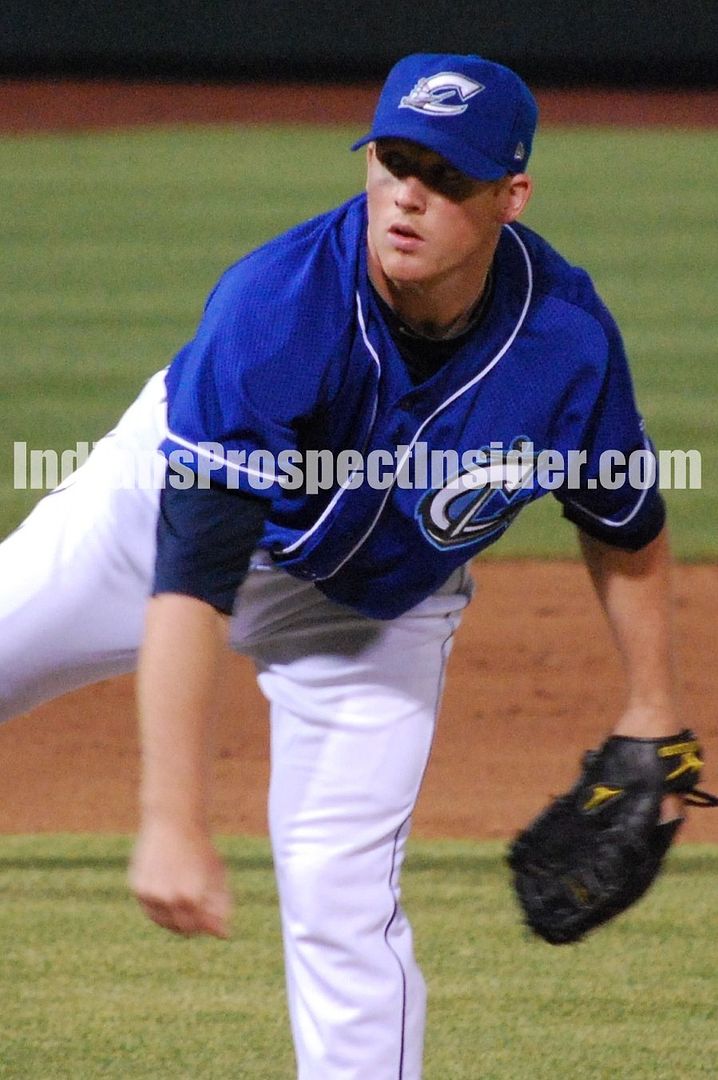
(Photo: Tony Lastoria)
History: Todd was selected by the St. Louis Cardinals in the 2nd round of the 2007 Draft out of the University of Arkansas. The Indians acquired him in July of 2009 from the Cardinals as the player to be named in the Mark DeRosa trade. He was the Cardinals Minor League Pitcher of the Year in 2008.

Strengths: Todd is a strike thrower who has a three-pitch mix led by a fastball that sits at 90-92 MPH and has touched 94 MPH. He is aggressive and gets good leverage with his fastball and gets some good sink down in the zone. He has good command of his fastball and does a good job keeping it out of the middle of the plate, and also gets some cutting action at times with it. His slider sits in the mid-80s and is the best pitch in his repertoire that he uses to strikeout right-handers. He gets good hard, late break with the slider and it is a pitch he has a ton of confidence throwing at any time in any count. He flashes a good feel and gets good downward movement from his average circle changeup, but it is an inconsistent pitch for him.

Todd has a nice easy motion, but as he brings his glove down from over his head he hits another gear and just explodes to the plate with maximum effort. The high energy windup combined with a long stride and quick rotation of his hips allows him to get some extra velocity on the ball when he throws it. He is a fundamentally sound pitcher who repeats his delivery well, and his quick delivery allows him to create some deception on all of his pitches.  He has a resilient arm and can handle a large workload in the bullpen. He doesn’t back down and has a bulldog mentality, and in the past has been compared to former big league reliever Randy Meyers.

Opportunities: Todd is not a big guy, and his smallish frame limits him to a bullpen role because he is not built to be a workhorse and pitch 180+ innings. His changeup is still not a major league quality pitch because it is inconsistent and he lacks confidence in it, which is a problem as he has nothing to attack left-handers with. For him to have any chance at an extended career in the big leagues, he will need to develop his changeup and become more consistent with it.

Outlook: Todd regressed some last year, and his poor track record in appearances at the big league level over the two seasons may be an opportunity lost that will be hard to get back. The Indians did not even bother calling him up in September after Columbus finished their season, which may say something. All that said, he has proven everything he needs to prove at the minor league level with a lot of success the last two seasons at the Triple-A level and needs a chance to prove himself at the big league level. He will go into spring training as a candidate for one of the final spots in the Indians’ bullpen, but if he does not make the Indians’ opening day roster he will open the 2011 season at Triple-A Columbus as bullpen depth and be one of the first players called up when a need arises.

YearAgeTeamLvlWLERAGSVIPHERHRBBSOAVGBB/9K/9WHIP
200721BataviaA-412.7816058.1481821469.2232.210.61.06
200822Palm BeachA+301.657127.11850735.1842.311.50.92
200822SpringfieldAA452.97170103.07934122481.2162.17.11.00
200822MemphisAAA113.974022.2191041120.2324.47.91.32
200923St. LouisML0010.80101.232122.37510.810.83.00
200923MemphisAAA422.20412449.0391231359.2142.410.81.06
200923ColumbusAAA000.00314.010007.0770.015.80.25
200923ClevelandML017.4019020.231173718.3563.07.81.84
201024ClevelandML007.50506.095039.3334.513.52.00
201024ColumbusAAA423.3144449.0461861853.2413.39.71.31
MiLB Totals20112.7913230313.1250972787324.2182.59.31.08
MLB Totals017.6225028.1432441229.3523.89.21.94


Friday, February 4, 2011

2011 Indians Top 50 Prospects: #38 Ezequiel Carrera

Ezequiel Carrera – Outfielder
Born: 06/11/1987 – Height: 5’10” – Weight: 185 – Bats: Left – Throws: Left

(Photo: Tony Lastoria)
History: Carrera was signed by the New York Mets as an undrafted free agent out of Venezuela in April of 2005. In December of 2008 he was traded by the Mets to the Seattle Mariners as part of a nine player deal that sent reliever J.J. Putz from the Mariners to the Mets. The Indians acquired him from the Mariners in June of 2010 as part of the trade that sent Russell Branyan to the Mariners. At the time of the trade he had a hip injury which slowed his debut, and then he later had a hamstring injury which caused him to miss a lot of time with the Indians in 2010.

Strengths: Carrera is a solid hitter who makes his living at the plate by consistently putting the ball in play and using his speed to put pressure on the defense. He has well below average power, but shows good plate coverage with an ability to hit to all fields and get on base at a good clip. He shows above average strike zone awareness and has a good understanding of what kind of hitter he is by often times slapping the ball in play to find holes or to leg out hits.

Carrera doesn't steal a lot of bases, but he has plus speed and could be a very good pinch running option off the bench for a major league team. He is more of a defensive specialist as he plays an above average center field with solid arm strength and is versatile where he can play all three outfield spots with ease. He shows good first step quickness and takes good routes to balls.

Opportunities: Carreras lacks any real power or ability to drive the ball and is more of just a singles hitter, something that big league pitchers will take advantage of and go right at him and make him hit his way on. His pitch recognition skills also need improvement for him to have better success when he gets to the big league level. Even though he covers a lot of ground and gets good jumps on balls, he sometimes relies too much on his speed so needs to be more consistent with his approach to defense.

Outlook: The Indians were very pleased with what Carrera showed them over the course of the 2010 season and in winter ball. While he had a few bumps and bruises which prevented him from getting into the lineup consistently at Columbus, he showed the ability to be organizational depth at the big league level in the outfield and a future fourth outfield option for them. In a lot of ways he is very much like former Tribe minor league outfielder Jose Constanza, though while Constanza was a bigger base-stealing threat, Carrera is clearly the better defender. He has an outside shot to make the Cleveland opening day outfield as a fourth outfielder, but will likely open the 2011 season at Triple-A Columbus.

YearAgeTeamLvlGABRH2B3BHRRBIBBSOSBAVGOBPSLGOPS
200518VSL MetsR451501934320815477.227.308.273.581
200619VSL MetsR57216416545119162822.301.365.380.745
200720GCL MetsR45179416183126262916.341.430.436.866
200720BrooklynA-2070112120064136.300.347.329.676
200821St. LucieA+114430611131112729468628.263.344.393.737
200922West TennAA9132968111124238596227.337.441.416.857
201023TacomaAAA6421324576201820329.268.339.315.654
201023AZL IndiansR414261004120.429.467.500.967
201023ColumbusAAA41161194673116123411.286.337.385.722
MiLB Totals4811762286514543112164199333126.292.371.378.749

Thursday, February 3, 2011

2011 Indians Top 50 Prospects: #39 Vinnie Pestano

Vinnie Pestano – Right-handed Pitcher
Born: 02/20/1985 – Height: 6’0” – Weight: 205 – Bats: Right – Throws: Right

(Photo: Ken Carr)
History: Pestano was selected by the Indians in the 20th round of the 2006 Draft out of Cal-State Fullerton. He was one of the top relief prospects in the country going into the 2006 Draft, but a serious elbow injury early in the season sidelined him. The Indians drafted him even they knew he was injured, and after he had Tommy John surgery on July 21, 2006 they eventually signed him on August 17th, 2006 to a professional contract. He finished 2nd in the organization in saves (17) last year.

Strengths: Pestano used to use a submarine-sidearm style arm slot since college to help add some deception and movement to his pitches, but to help maintain better health and eliminate a lot of the wear and tear on his arm he brought his arm slot up last year to more of a three-quarters arm slot. The change not only helped in the health department, but with his performance and stuff as well. Last year his fastball velocity increased by 2-3 MPH as he was consistently at 91-93 MPH and hit 95 MPH a few times. His fastball showed more life and the arm slot change helped him get more depth and movement on his two-seam fastball with more run and sink, something he always had a problem with before dropping to the sidearm slot.

The arm slot change also allowed Pestano to revamp his slider, which was another big area of improvement for him last season. He had lacked a feel for his slurvy slider since he returned from Tommy John surgery, but the arm slot change allowed him to throw it much sharper and with more velocity compared to the slower, slurvy break it used to have. He changed the grip and angle of it last January, and it resulted in about a 3-4 MPH increase in velocity and had more deception. He picked up a four-seam fastball last year that shows flashes of good cutting action. He did toy around with a changeup when he first turned pro, but because of his bullpen role and his inability to create much deception with it the Indians scrapped the pitch and he now exclusively throws his fastball-slider combination.

Pestano is very experienced pitching in the late innings as he was a closer at Cal State-Fullerton and since becoming a professional he has been the closer at every level of the Indians system. It is a role he has always flourished in because of his excellent makeup, competitiveness, and strong will. When he comes sprinting out to the mound from the bullpen, he comes out with a purpose and focus many relievers lack. He has the eyes to pitch in the late innings because nothing rattles him, and is tenacious on the mound battling every pitch going right after hitters. The true separator for him has never been stuff, but his ability to pitch in high leverage situations, his strong mental approach, and his ability to throw strikes.

Opportunities: Health has been Pestano’s biggest roadblock as a professional. Even after successfully returning from Tommy John surgery in 2007, has had had several setbacks with his right elbow. Looking at his performance last year you would never know that he was very close to possibly seeing his career come to an end. He had a breakthrough season in Akron during the 2009 season with 24 saves by the All Star break before he had to be shutdown because of elbow problems in early July. He did not pitch again that season until the fall when he went out to the Arizona Fall League and made a few appearances, but then the elbow problems came back and there were serious concerns with his elbow. But after some extreme hard work in the offseason he came back healthy by spring training last year.

Pestano lacks a pitch to effectively attack left-handers with, so he is similar to Joe Smith in that he could get exposed to major league left handed hitters. He pitches to contact and relies on groundballs, so commanding his pitches to both sides of the plate is paramount to his success. While he is a good strike thrower, he needs to become more consistent pitching to both sides of the plate as his command on the edges of the plate comes and goes. He has a tendency to fall off to third base during his delivery, so he needs to continue working on finishing out front and through his delivery so the balance with his landing is better.

Outlook: Pestano has come a long way with his health as he was only up to 87 MPH his first pro season in 2007 at short-season Single-A Mahoning Valley. He may not have the electric stuff that most people become so infatuated with when looking at closers, but he knows how to pitch and is a warrior on the mound, which are arguably the two most important traits for a late inning reliever than stuff alone. He will be 26-years old before the season starts, and his questionable health hurts his ranking, but with his return to health last season, performance, and development he has made himself an immediate bullpen option for the big league team going forward. He should open the 2011 season in the Triple-A Columbus bullpen, but should get an opportunity in Cleveland at some point in the year when a need for relief help arises.

YearAgeTeamLevelWLERAGSVIPHERHRBBSOAVGBB/9K/9WHIP
200722Mahoning ValleyA-113.5721622.217957270.22.810.71.06
200823Lake CountyA111.55291529255113230.234.07.11.31
200823KinstonA+124.00259272312111270.223.79.01.26
200924AkronAA232.86342434.23011213310.233.48.01.24
201025AkronAA112.7014313.112412180.241.412.21.05
201025ColumbusAAA121.55431446.1358114590.22.711.51.06
201025ClevelandML003.60515420580.229.014.41.80
MiLB Totals7102.55166711731424911601850.223.19.61.17
MLB Totals003.60515420580.229.014.41.80

Wednesday, February 2, 2011

2011 Indians Top 50 Prospects: #40 Tony Dischler

Tony Dischler – Right-handed Pitcher
Born: 03/06/1989 – Height: 6’3” – Weight: 198 – Bats: Right – Throws: Right

(Photo: Lianna Holub)
History: Dischler was selected by the Indians in the 23rd round of the 2010 Draft out of Louisiana State University-Eunice Junior College. As a draft eligible sophomore he had a commitment to attend Louisiana-Lafayette next year, but chose to sign with the Indians for $255,000. He transferred to LSU-Eunice from Louisiana-Monroe University after a poor freshman campaign in 2009.

Strengths: Dischler is a big, strong, physical pitcher with a nice frame and easy delivery who has a lot of upside. His fastball ranges from 90-97 MPH, though this wide range is because as a reliever it has topped out as high as 96-97 MPH while as a starter he more consistently sits at 90-94 MPH. He also throws a slider that sits in the low 80s and a developing changeup. His slider is considered his best secondary offering and a potential plus pitch for him.

After Dischler's poor freshman season at Louisiana-Monroe his career really seemed to take off when he went out to the New York Collegiate League in the summer of 2009. He pitched well there and got the attention of Indians scout Les Pajari as well as scouts for other teams, and then he went to LSU-Eunice and had a solid season there in 2010. Going into the 2010 Draft many felt he was a guy who could go as high as the second or third round but he slipped due to signability reasons.

Opportunities: Fastball command is something Dischler will need to improve, especially since he is a groundball pitcher who does not get a lot of strikeouts and relies on batters putting the ball in play. He also needs a better feel for both his slider and changeup. When he is throwing his slider well it has good depth, but it is still an inconsistent pitch which has a tendency to flatten out. His changeup is still a work in progress and also needs more consistency. His velocity will be something worth monitoring going forward as it saw a slight drop in 2010.

Outlook: It remains to be seen if Dischler will be a starter or reliever, but at the outset of his pro career the Indians are going to develop him as a starter and see what happens. If he can refine his slider and changeup then he certainly has potential as a middle of the rotation starter down the road. If he ends up in the bullpen later in his career he has the makings of a solid middle reliever, maybe more. He should open the 2011 season in the starting rotation at Low-A Lake County - likely in a piggyback role - and if he pitches well should move to High-A
Kinston by the end of July.


YearAgeTeamLvlWLERAGGSIPHERHRBBSOAVGBB/9K/9WHIP
200920Louisiana-MonroeC219.647318.229202157UNK7.23.42.36
201021Louisiana-EuniceC1133.56201791.0843633368.2393.36.71.29
201021Mahoning ValleyA-000.00225.030015.1761.89.00.80
MiLB Totals000.00225.030015.1761.89.00.80

Tuesday, February 1, 2011

2011 Indians Top 50 Prospects: #41 Alexander Perez

Alexander Perez - Right-handed Pitcher
Born: 07/24/1989 – Height: 6’2” – Weight: 156 – Bats: Right – Throws: Right

(Photo: Tony Lastoria)
History: Perez was signed by the Indians as an undrafted free agent in May of 2007 out of the Dominican Republic. After coming down with elbow tendonitis at the end of spring training last year, the Indians eventually shut him down and he underwent Tommy John surgery in May.

Strengths: Perez throws a fastball that sits at 89-91 MPH and has touched 93 MPH, and complements it with a curveball and changeup. He gets good sink on his fastball and commands it well to both sides of the plate, and because of his arm strength and how he works so easy with his delivery there is still potential for velocity gains as he matures. Both his curveball and changeup are above average secondary offerings with plus potential as he shows an ability to consistently throw both for strikes and command them well in the zone. His curveball has the potential to become an out pitch at the big league level as it has some good, hard break and he gets a lot of swing and misses with it. His changeup is still improving but has good action in the zone and he creates some very good deception with it because of some excellent arm action.

Perez shows a good feel for pitching and does a very good job of limiting mistakes by not allowing a lot of walks and induces a good amount of groundballs. He creates some deception in his delivery where he is very soft when he breaks his hands and leaves the rubber and then suddenly has a very fast arm firing the ball to the plate. He shows a lot of confidence on the mound and is very focused on what he needs to do to get the job done. Even when things are going well he maintains his positive approach and carries himself well. He has gained over 30 pounds since he was signed almost four years ago, though is still a very tall and lanky loose bodied pitcher who has lots of room for growth.

Opportunities: Perez shows a lot of ability with his secondary stuff, but to make him a better pitcher and to be able to compete at the higher levels he needs to develop more confidence in his fastball. He often relies on his advanced secondary stuff to get hitters out at the lower levels, but that is not going to work as he gets into the higher levels. That being said, in addition to getting him back on the field and healthy in 2011 the Indians want to see him throw more fastballs. His rehab from Tommy John may actually help in that regard as he will initially be limited to throwing almost only fastballs, so it could be an opportunity for him to not only regain his confidence in his health but to also become more confident in his fastball. He also needs to continue refining his delivery mechanics by keeping his head straight in his follow through as at times it has a tendency to pull off to the side which affects his command. He also needs to continue working out to get bigger and stronger in order to be able to handle the workload of being a starting pitcher.

Outlook: Even though he is coming off of a serious injury, Perez is still young and has the stuff to become a middle of the rotation starter in the big leagues. His prospect status has taken a big hit because of the injury, but if he can prove healthy and get back to the pitcher he once was he should have no problem elevating himself back up near the top of the Indians starting pitching ranks. He is in the final stages of his rehab from Tommy John surgery, and should be on a tight pitch and inning count in 2011. He will likely open the season in extended spring training to complete his rehab, and then join up with High-A Kinston or Double-A Akron later in the year.


YearAgeTeamLevelWLERAGGSIPHERHRBBSOAVGBB/9K/9WHIP
200717DSL IndiansR122.90131049.2411631364.2182.411.61.09
200818GCL IndiansR244.2610950.2372451649.2042.88.71.05
200919Lake CountyA543.04151583692892476.2232.68.21.12
200919KinstonA+122.878731.132101931.2642.68.91.31
201020KinstonA+012.70226.252028.2002.710.81.05
MiLB Totals9133.254843221.1184801864228.2232.69.31.12